
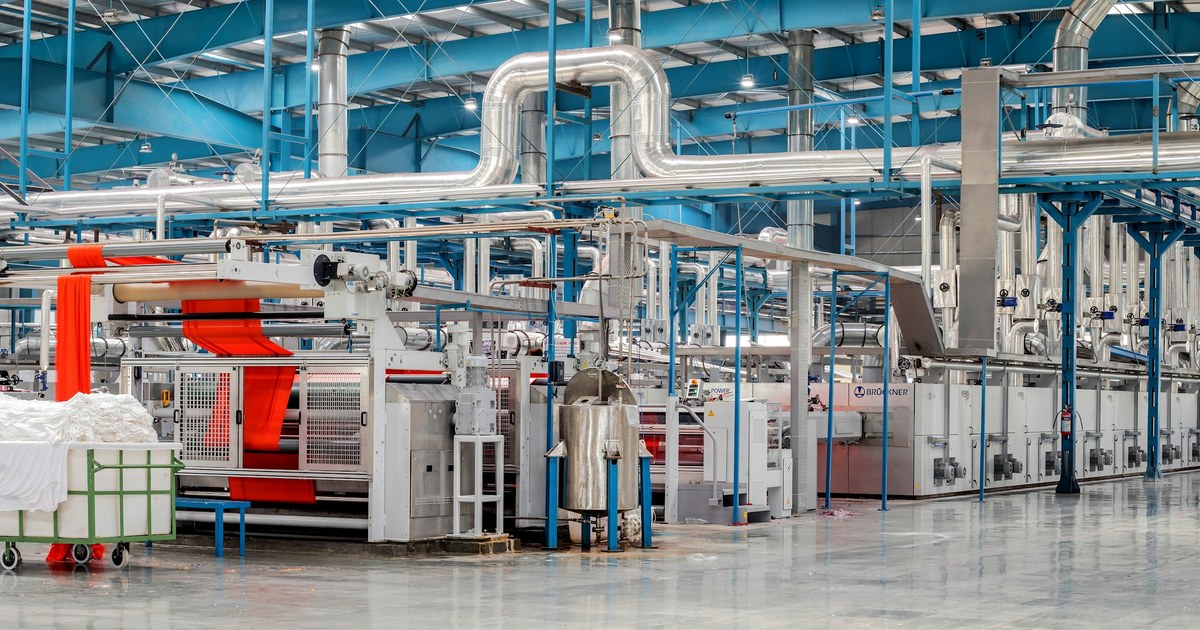

China’s 15th Five-Year Plan, approved in March 2026 for the 2026–2030 period, sets out China’s next phase of economic and industrial development. Its priorities matter not only for China but also for countries seeking to benefit from changes in global production and supply chains. By prioritising advanced manufacturing, semiconductors, robotics, and artificial intelligence, China is accelerating its shift towards higher-value, technology-intensive production. The opportunity for Pakistan is straightforward: can it position itself to capture the industries China is leaving behind?
China’s industrial transition has been anticipated for years, but its pace is now accelerating. Rising wages, higher labour cost, and rapid automation are making labour-intensive production increasingly less competitive. As a result, industries such as textiles, apparel, light electronics, consumer goods, and automobile components are looking for lower-cost production bases abroad. The strategic question for Pakistan is whether it can become a competitive destination for the firms and supply chains considering expanding or relocating labour-intensive production beyond China.
Vietnam has emerged as a major destination for export-oriented manufacturing. Vietnam’s realised FDI reached a record US$25.35 billion in 2024, while registered investment in processing and manufacturing totalled US$25.58 billion, accounting for 66.9 per cent of total registered FDI. Bangladesh dominates labour-intensive apparel production, while Indonesia benefits from its large domestic market. Pakistan continues to struggle to convert its advantages into sustained industrial investment.
The failure is not geographical. It is institutional. Vietnam’s success is not an accident of location; it rests partly on a network of 17 free-trade agreements covering more than 80% of global GDP, alongside industrial zones, trade facilitation and a policy environment that has attracted sustained foreign investment. Bangladesh’s garment industry did not grow by accident either: it grew because the government removed specific barriers, trained specific workers, and maintained specific policy commitments over decades. Pakistan has the raw ingredients. What it has consistently lacked is the recipe.
For Pakistan, CPEC 2.0 provides infrastructure that could support this transition. The challenge is no longer simply to build roads and designate industrial zones, but to turn them into globally competitive manufacturing ecosystems.
First, Pakistan’s Special Economic Zones must become fully operational industrial ecosystems rather than simply designated investment sites. Reliable electricity, one-window facilitation, on-site customs, ready-built factory units, and secure long-term leases should become standard. Success should be measured by operational factories, investment actually realised, jobs created, export performance and linkages with domestic suppliers, not by investment announcements or groundbreaking ceremonies alone.
Second, the business environment must become predictable. Investors making long-term manufacturing commitments do not need a perfect regulatory framework. They need a stable one. Frequent tax-policy reversals, retrospective changes to investment agreements, and bureaucratic delays that stretch from weeks into months are not minor inconveniences. They are investment-killers. Countries competing for the same relocation wave are eliminating these frictions systematically. Pakistan must do the same, and it must do so visibly, so that the global investors now reassessing their China exposure can see the change in real time.
Third, the workforce must be prepared. Pakistan has a genuine demographic dividend: a young, large, and relatively low-cost labour force. But modern manufacturing, even at the assembly level, increasingly requires workers who can operate numerically-controlled machines, read technical specifications, and maintain quality-control standards. Pakistan’s own labour-market assessments point to strong demand for skilled workers in manufacturing, textiles and garments, among other sectors, highlighting the need to align vocational training more closely with industry requirements. A targeted, industry-linked skills programme built around the sectors most likely to relocate (textiles, electronics assembly, EV components, light engineering) is not a soft social-sector priority. It is a hard economic prerequisite.
Fourth, Pakistan should focus on sectors where it already enjoys a competitive advantage or can realistically build one. Textiles and apparel remain the strongest immediate opportunity, while electronics assembly, EV components, and light engineering offer medium-term potential. Concentrated policy support will create industrial clusters that attract further investment.
The 15th Five-Year Plan runs to 2030. China’s industrial restructuring will not wait for Pakistan to finish its internal debates about tax policy or business-environment rankings. The companies now mapping their ‘China plus one’ alternatives are making decisions this year, not in five years. Once a manufacturer commits to Vietnam or Indonesia, builds a facility, trains a workforce, and establishes a supply-chain network, that decision is not easily reversed. Industrial relocation is not a tap that can be turned on and off; it is a one-time commitment that flows toward countries that are visibly ready.
Pakistan is not starting from zero. CPEC has laid real infrastructure. The energy picture, for all its well-documented problems, is better than it was a decade ago. The country’s export base in textiles already demonstrates that it can produce for global markets. But demonstrating capability in one established sector while ceding every new opportunity to regional competitors is not a growth strategy; it is managed decline dressed up as stability.
China’s 15th Five-Year Plan is, in effect, an invitation. Pakistan’s task is not to debate the opportunity but to seize it. By removing barriers to investment and focusing on sectors where it can compete, including textiles, electronics assembly, EV components, engineering goods, and value-added agro-processing, Pakistan can position itself to benefit from China’s industrial transformation. The window of opportunity is open, but Pakistan’s ability to benefit will depend on how quickly it can deliver predictable policies, competitive industrial zones, skilled workers and an export-oriented manufacturing environment.
Opinion pieces reflect the views of their authors, not necessarily an institutional position of PIVRA.
The Current Account Is Back in Deficit
Pakistan's Policy Rate at 12%: What the Hike Can and Cannot Do
Want to write for PIVRA? Read our submission guidelines, then send a draft to publications@pivra.org.