
Pakistan's Policy Rate at 12%: What the Hike Can and Cannot Do
The State Bank of Pakistan raised its policy rate to 12% on 26 October, with inflation at 10.3% and core inflation at 8.4%. The decision is aimed at expectations and the rupee. It does not change the oil and wheat prices behind the pressure.
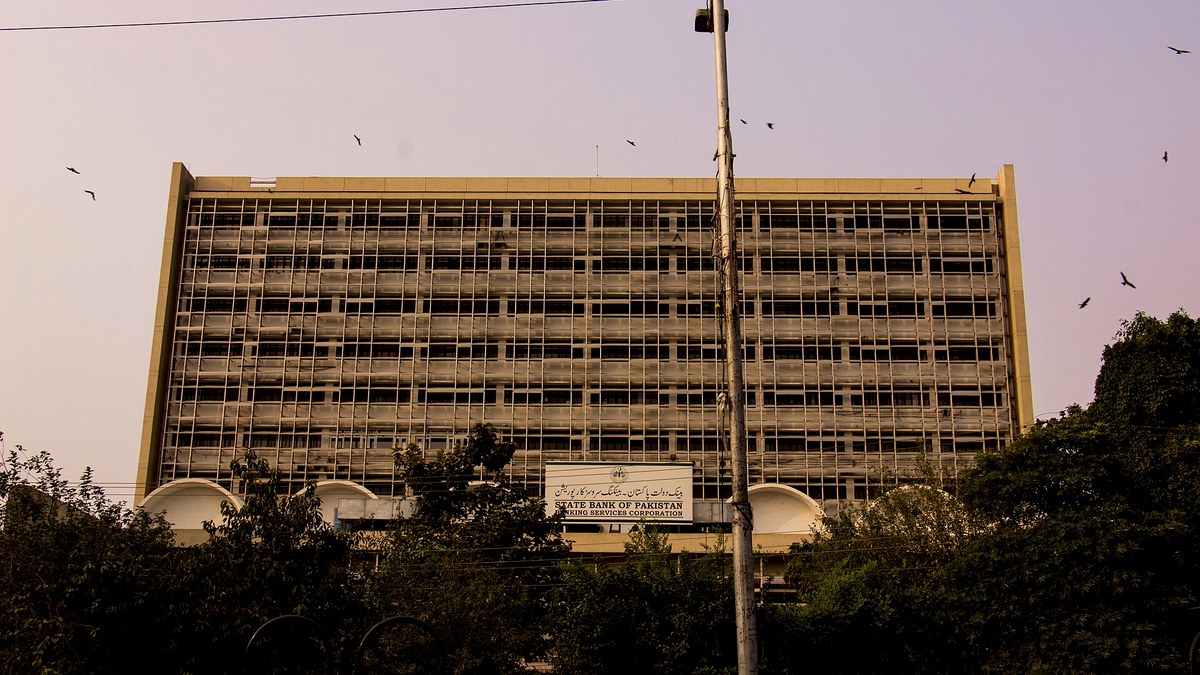
Nine of the ten members of the Monetary Policy Committee voted to raise the policy rate by 50 basis points to 12% on 26 October. It was the second increase this year, after a 100 basis point move in April, and it took effect the next day.
12%Policy rate
10.3%Inflation, September
8.4%Core inflation
3.7%Growth, FY26
A hike against prices the committee does not set
The trigger was not domestic demand. The committee cited the Middle East conflict, high global energy prices, domestic wheat supply frictions, possible energy tariff adjustments and adverse weather. Headline inflation was 10.3% in September, above its expectation. Core inflation, which excludes food and energy, was around 8.4% and had stopped falling.
A higher policy rate can slow demand. It cannot lower the dollar price of crude oil or produce more wheat. What it can do is keep expectations from adjusting, and stop a supply shock from becoming a wage and price-setting problem.
Core inflation is the reason it moved
Core at 8.4% is the evidence that the shock has reached domestic prices. The committee said food and energy inflation could feed into expectations and then into core. Once that happens, the rate has to stay higher for longer.
The SBP's surveys show consumers' inflation expectations rising while business expectations fell, and confidence weakened for both. Households expect higher prices and firms expect weaker demand. That combination supports a cautious stance.
The cost lands on investment
A 12% policy rate is among the highest in the region. It raises the cost of working capital and project finance. Growth was 3.7% in FY2025-26 and the SBP forecasts 3.5% to 4.5% in FY2026-27. The recovery is gradual: large-scale manufacturing grew 1.9% in July and August, against 0.4% in the fourth quarter of FY2025-26.
The export capacity that would eventually ease the external constraint depends on investment. The rate makes that investment more expensive at the same time as it tries to slow imports. That is the trade-off, not a side effect.
Two tests for the next two quarters
If core inflation stays near 8.4% and begins to fall while the rupee holds, the increase did its job: expectations stayed anchored and the supply shock did not become persistent. If core stays at 8.4% while credit slows and investment falls, the cost will be clearer than the benefit.
The second test is the external account. The current account recorded a $874 million deficit in July to September, more than double the whole of FY2025-26. A higher rate can support the rupee. It does not change the oil and food import bill. If the deficit widens, the rate will be asked to do more than it can.
The 12% rate is a defensible response to an inflation outlook that has worsened. It is not a solution to the import bill. The test is whether core inflation responds before investment does.
Data and documents. The decision and the committee's reasoning come from the SBP's Monetary Policy Statement of 26 October 2026. Inflation, growth and the external account figures come from the same statement and the SBP's current account data for September 2026, reported by Dawn on 27 October and 17 October.

Want to write for PIVRA? Read our submission guidelines, then send a draft to publications@pivra.org.