
The Current Account Is Back in Deficit
Pakistan's current account recorded a $874 million deficit in July to September 2026. That is more than double the $391 million deficit of the whole of FY2025-26.
In September 2025, the current account ran a surplus of $133 million. In September 2026, it ran a deficit of $356 million. The quarter as a whole was $874 million in deficit, against $755 million a year earlier.
| Measure | A year earlier | This year | Change |
|---|---|---|---|
| Current account, July to September | -$755m | -$874m | -$119m |
| Current account, September | +$133m | -$356m | -$489m |
| Trade deficit, July to September | $9.37bn | $10.79bn | +$1.42bn |
The gap is oil, wheat and edible oil
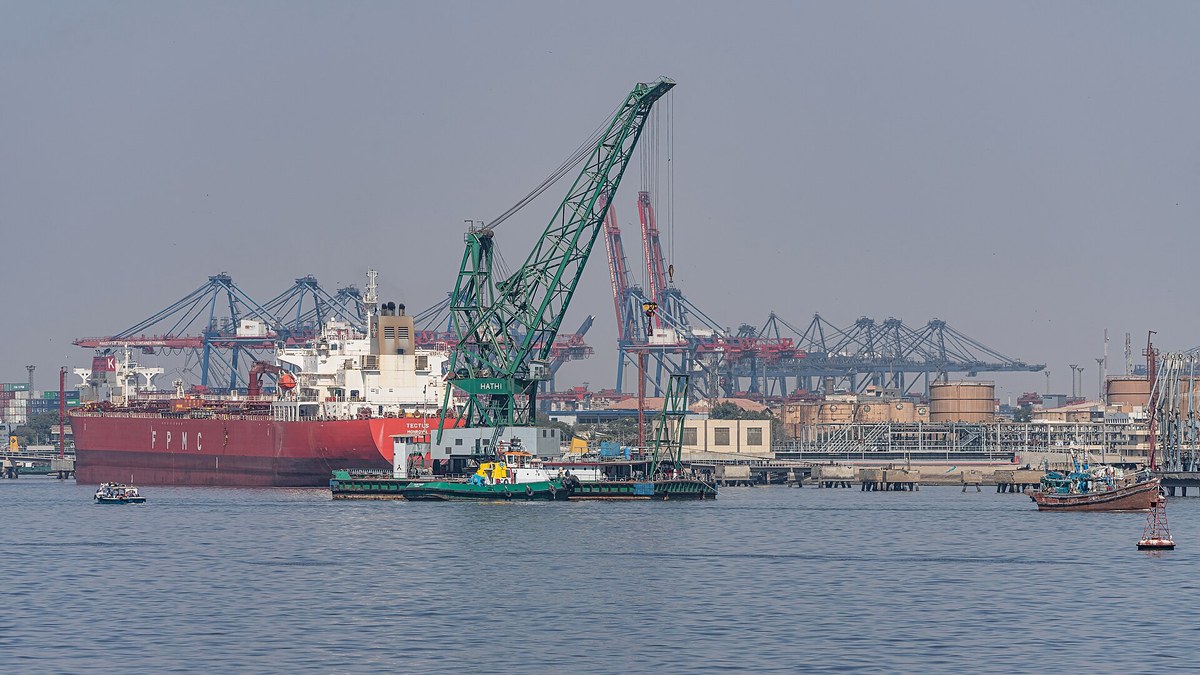
The trade deficit widened by 15% to $10.79 billion. Exports rose by $604 million to $8.454 billion. Imports rose by $2.2 billion to $17.784 billion. In FY2025-26, petroleum imports were $15.5 billion and food imports $8.3 billion. The food bill includes wheat, edible oil and cotton.
These imports do not fall quickly when demand slows. Households and firms do not stop buying fuel or flour when the rupee weakens. That makes the deficit sensitive to prices Pakistan does not set.
Remittances are financing the gap, not closing it
Remittances above $41 billion in FY2025-26 are the main offset. They are a transfer, not export capacity. They help finance the gap, but they do not change the composition of imports or the narrow base of exports.
The SBP said remittances remained resilient and were projected higher than previously assessed. That is a cushion. It is not a strategy.
What would make this a crisis
The SBP projects a deficit of 0% to 1% of GDP in FY2026-27. At $874 million, the quarter is not a crisis. A deficit this size can be financed.
It becomes a problem if three things happen together: oil stays high, exports do not accelerate, and remittances slow. Then the adjustment comes through slower import growth, a weaker rupee, or higher interest rates. Each has a cost for growth.
The early signs are mixed. Exports are recovering in rice, high-value-added textiles and services. Remittances are resilient. But imports are rising faster, and the base is narrow.
The deficit is small. The direction is the problem. The test for the rest of FY2026-27 is whether exports and remittances grow faster than the import bill. If they do, the deficit stays inside the SBP's range. If they do not, the current account becomes a constraint on growth again.
Data and documents. The current account figures come from the SBP's release for September 2026, reported by Dawn on 17 October 2026. The FY2026-27 projection is from the SBP's Monetary Policy Statement of 26 October 2026.


Want to write for PIVRA? Read our submission guidelines, then send a draft to publications@pivra.org.