
Can a Drama Change What Punjabi Means?
A hit drama gives Punjabi to characters with authority, desire and grief. Sociolinguistics explains why that matters, and why television alone cannot undo the stigma attached to the language.
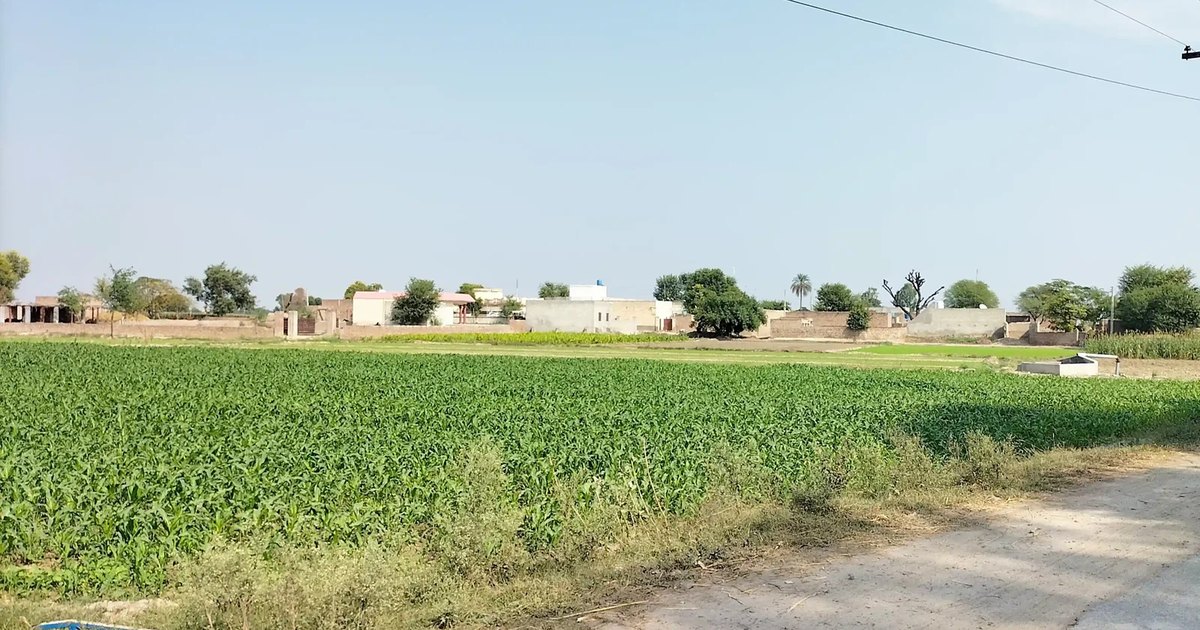
“Pendu” is the word to start with, because it shows how language prejudice works. The dictionary meaning is mild enough: a villager, a folksy sort of person. The social meaning is harsher: uneducated, unrefined, crude. Sociolinguists call this indexicality. A way of speaking comes to stand for a type of person, and listeners end up judging the person instead of the speech.
A word as a social weapon
Nothing in the grammar, vocabulary or sound system of Punjabi makes it less refined than Urdu or English. No language is inferior to another. The hierarchy is social, built by history, institutions and repetition, which is why a television serial belongs in this discussion. Media is one of the main places where such meanings are made and remade.
Numbers versus power
Punjabi is the mother tongue of the largest share of Pakistanis. In the 2017 census 38.78 per cent reported it as their first language, against 7.08 per cent for Urdu. Yet Urdu is the national language and the language of formal life.
Sociolinguists call this arrangement diglossia: a division of labour in which one variety serves the “high” domains and another the “low” ones. English sits above both. A Punjabi speaker who wants to rise is expected to climb through Urdu and English, and the climb often means leaving Punjabi behind.
Pierre Bourdieu’s idea of linguistic capital, set out in Language and Symbolic Power, helps explain why. Languages carry different value in the markets of school, employment and social life. Parents who switch to Urdu or English at home are making a rational bet on those markets, even though the result is a language shift between generations.
Standard language ideology
Underneath sits standard language ideology, the belief that one variety is the right one and the rest are deviations from it. When a Punjabi speaker uses Urdu, the speech is often “corrected” for accent, gender agreement, retroflex or aspirated sounds, and the Punjabi background is blamed for any error. The Urdu may be perfectly fluent. What gets policed is the mark of origin.
The result is a familiar linguistic insecurity. Speakers suppress their home variety in formal settings, apologise for it or deny speaking it. Many urban Punjabis understand the language completely but lack the confidence to speak it outside the home.
Enregisterment on screen
The idea most relevant to television is enregisterment, the process by which a set of linguistic features becomes socially linked to a kind of person. In mainstream Pakistani drama, Punjabi has long been the character voice. Certain intonations, exclamations and kinship terms marked the comic servant, the loud relative and the village simpleton. Audiences heard the link, it was repeated, and the accent alone was enough to tell them how to feel about the speaker.
Mitti De Baway, which premiered on Green Entertainment on 23 September 2026, disturbs that habit. Set against a Punjabi cultural background, the serial deals with love, social class and destiny. Its language work has drawn particular praise. Viewers have singled out Samiya Mumtaz’s Mai Phataan, her Punjabi accent, dialogue delivery, expressions and body language, and Aena Khan’s portrayal of a lively young Punjabi girl.
What matters in linguistic terms is the pairing. When the same accent and idiom belong to characters with authority, desire, menace and grief, the old indexical link (Punjabi means low status) weakens and new links form. Mahira Khan’s Billo grows into the assertive Bari Sarkar, one of the serial’s talking points. The voice of power is now a Punjabi voice. That is re-enregisterment at work.
Covert prestige
William Labov’s work on covert prestige adds a complication. Stigmatised varieties often hold hidden value for their speakers: solidarity, toughness, authenticity, belonging. Punjabi has plenty of that. It is the language of music, of teasing between friends, of warmth. It has never been wiped out or pushed entirely to the margins. Its prestige has simply been covert, lived in private and informal spaces, while overt prestige went to Urdu and English.
Mass media is one of the few forces that can bring covert prestige into the open. The serial has been reported as the fastest Pakistani drama to reach 200 million YouTube views, in just six episodes. Popularity is a form of social validation. It suggests that large audiences are willing to enjoy a Punjabi-inflected world and not merely put up with it.
Language and caste
Linguistic bias is rarely the only bias. It sits inside class hierarchies and, in Punjab, inside caste and land relations. The serial attends to both, in its treatment of caste-based contempt, family feuds and revenge. The stereotype of “pendu” speech is partly a stigma against rural, agricultural and lower-income communities. A story that foregrounds those hierarchies exposes the social machinery that attaches the stigma to the speech in the first place.
Script, schooling and the limits of representation
Some structural facts keep Punjabi in its place, and no drama can change them. In Pakistan, Punjabi is written in the Shahmukhi (Perso-Arabic) script but is rarely used as a medium of instruction, so many native speakers know the language without knowing how to write it. Literacy carries prestige, and in the public mind a language without it is merely “oral”. Tariq Rahman’s Language and Politics in Pakistan traces how such hierarchies were built through the decisions governments made in education and administration over decades.
There is also the risk of tokenism: using regional accents as costume without touching the social order underneath. Exposure outside institutions can make a language glamorous, but it cannot make it survive. That takes use in schools, newspapers and government.
Changing what a sound means
Languages survive when people use them, and people use languages that feel safe and worth using. That feeling is built from thousands of small social signals. A hit drama is one of them, and a loud one.
Mitti De Baway does this for some viewers, and what it does for a few it may do for many. If it helps even a handful of people hear Punjabi as a language of authority, love and complexity, it will have done what policy has tried and failed to do: change what the language means. The word “pendu” isn’t going anywhere. But meanings are made socially, and what a society has made, it can make again.
Opinion pieces reflect the views of their authors, not necessarily an institutional position of PIVRA.
The Screen in the Corner: What Cable Television Changed for Women and What Pakistan Never Measured

Words That Heal: A Linguistic and Psychological Perspective
Want to write for PIVRA? Read our submission guidelines, then send a draft to publications@pivra.org.