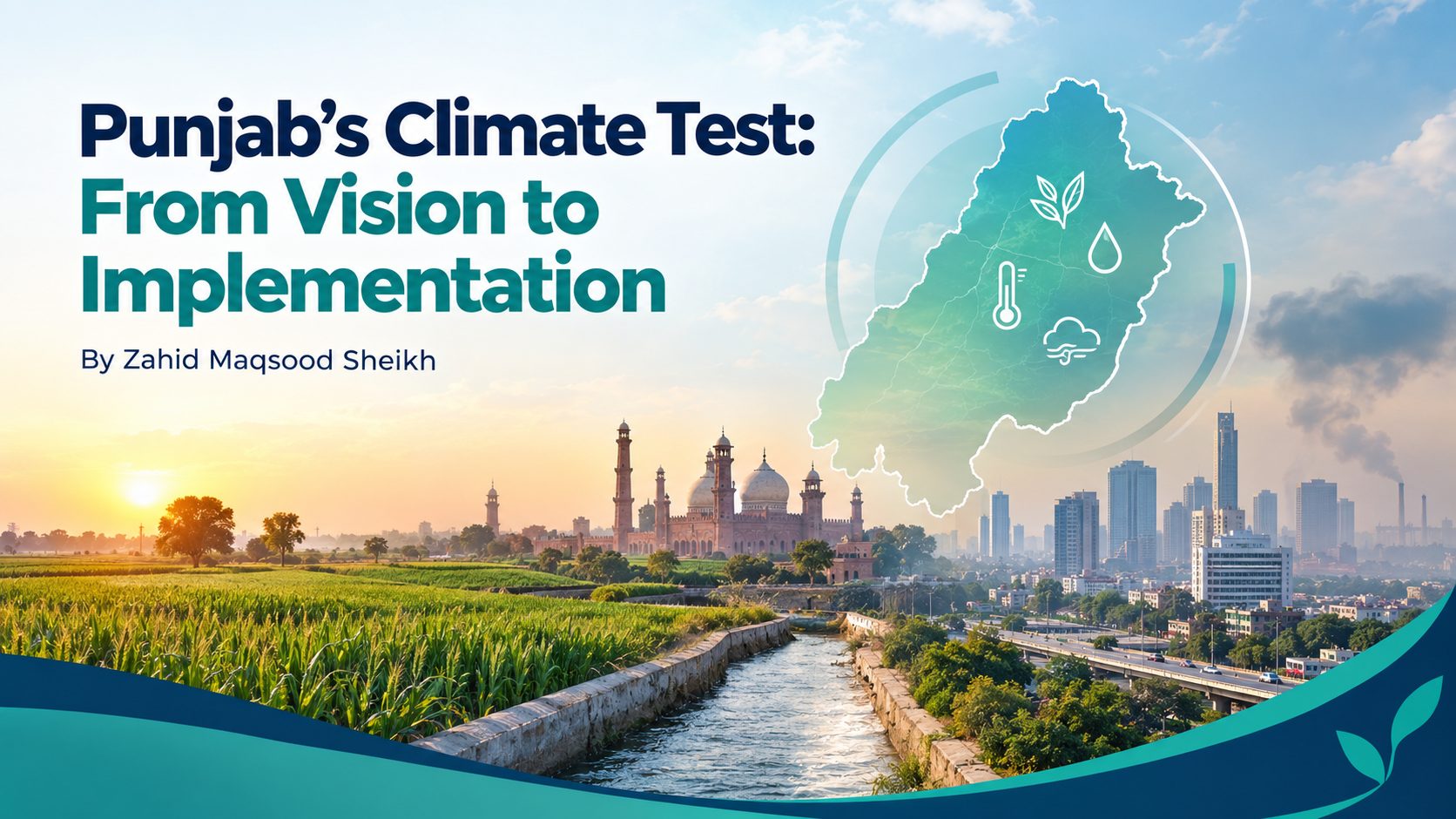
Climate change is no longer a distant environmental concern for Punjab. It is already reshaping daily life through longer heatwaves, irregular rainfall, floods, worsening smog, crop losses, water shortages and mounting pressure on public health. These are not isolated environmental problems; they directly affect agriculture, businesses, livelihoods and the province's long-term economic stability.
The Climate Resilient Punjab Vision and Action Plan 2024 is therefore a timely and necessary initiative. It recognises that Punjab must move from responding after disasters to preparing before they occur. The provincial government has presented the plan as an effort to align environmental protection with economic growth and has linked it with allocations in the development budget. That commitment is encouraging, but its credibility will depend on whether policy objectives are translated into measurable results.
Water security must remain Punjab's foremost climate priority. The province is facing increasing pressure from groundwater depletion, inefficient irrigation and rising demand from agriculture, industry and expanding cities. A credible resilience strategy requires accurate groundwater monitoring, stricter regulation of excessive extraction, wider use of water-efficient irrigation, rainwater harvesting and stronger protection of rivers, wetlands, floodplains and natural drainage systems.
Agriculture remains central to Punjab's economy and is particularly vulnerable to climate shocks. Farmers need practical support in the form of climate-resilient seeds, reliable weather forecasts, crop insurance, improved extension services and affordable technology. Adaptation will remain limited unless small and medium farmers can access these measures without taking on additional financial burdens.
Punjab's cities also demand urgent and sustained attention. Lahore, Faisalabad, Rawalpindi, Gujranwala, Multan and other urban centres are increasingly exposed to air pollution, urban flooding and extreme heat. Improving drainage, expanding green spaces, upgrading wastewater treatment, developing cleaner public transport and establishing effective heatwave response plans should become permanent urban priorities.
Land-use enforcement is equally important. Construction in flood-prone areas, waterways and natural drainage routes must be restricted. Weak regulation in these areas increases both the human and financial cost of extreme weather events.
Smog remains one of the clearest examples of the gap between policy and implementation. Air pollution cannot be treated only as a seasonal emergency. It requires year-round action on vehicle emissions, industrial fuel standards, crop-residue burning, construction dust and real-time air-quality monitoring. Stronger enforcement and coordination across departments are essential.
Climate action can also support economic growth. Investment in renewable energy, cleaner industries, electric mobility, recycling and modern waste management can generate jobs, encourage innovation and attract investment. However, these opportunities will require a skilled workforce, technical expertise, predictable regulations and improved access to finance.
The most serious challenge is institutional capacity. Environmental policies often fail because responsibilities are fragmented, enforcement is weak and implementing agencies lack trained staff and adequate resources. The Environment Protection Agency needs modern laboratories, monitoring equipment, qualified inspectors and stronger legal support. District administrations and local governments also require greater authority, funding and technical capacity to manage drainage, waste collection, land use and disaster response.
Transparency and accountability will determine whether public confidence is sustained. The government should regularly publish climate-related spending, project timelines, responsible departments and measurable annual targets. Each major project should have a clearly identified implementing agency and responsible officer.
An annual Climate Performance Report should track progress on air quality, groundwater, flood preparedness, renewable energy, public transport, wastewater treatment and industrial compliance. The report should be presented before the Punjab Assembly, independently reviewed and made publicly available.
Punjab has identified the right direction, but the more difficult phase has now begun. The province does not suffer from a shortage of policies; it faces the challenge of building institutions capable of delivering them. Success will be measured not by announcements, but by cleaner air, secure water, resilient agriculture, safer communities and cities better prepared for climate shocks.
Reach out and the editorial team will take it from there.
publications@pivra.org