
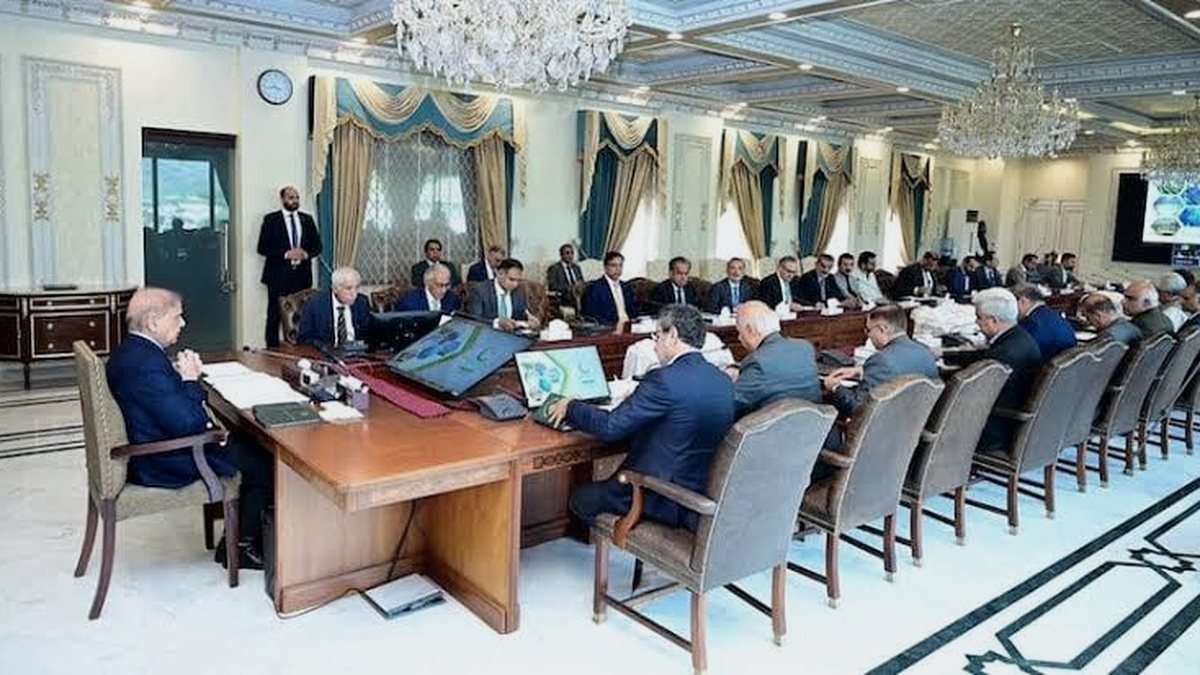
SIFC is the most discussed and least understood institution in Pakistan’s investment system. It carries political weight, convenes the highest levels of government and appears in almost every large project announcement. It is also not a regulator, a tax authority or a one-stop approval window. Its value is in sequencing, escalation and follow-through.
What SIFC is
The Special Investment Facilitation Council was constituted by the Prime Minister in June 2023 under the government’s Economic Revival Plan. Its stated purpose is to act as a single window for investment, coordinate federal and provincial departments, remove inter-agency bottlenecks and move priority projects faster. Its legal mandate sits in Chapter IIA of the Board of Investment Ordinance 2001, sections 10A to 10C.
SIFC is chaired by the Prime Minister. The Chief of the Army Staff sits on the Apex Committee, and the military provides facilitation support. That composition is unusual by international standards and is central to how the council works: it can put a federal ministry, a provincial chief minister, a regulator and a security agency in the same room. It is also a reminder that SIFC is a political and administrative coordination body, not an independent court or regulator.
The official channel for investment proposals is invest@sifc.gov.pk. The council describes a five-step process: initiate contact, proposal evaluation, personalised engagement, follow-up with stakeholders, and hand-holding through implementation.
How it is organised
Three committees and a set of sectoral working groups do the work.
| Body | Role | What it means for an investor |
|---|---|---|
| Apex Committee | Chaired by the Prime Minister, with federal ministers, provincial chief ministers and the army leadership | Strategic decisions and cross-provincial deadlocks that need political authority |
| Executive Committee | Chaired by the Minister for Planning, with federal and provincial officials | Project review, policy coordination and follow-up on sector bottlenecks |
| Implementation Committee | Senior officials and the SIFC secretariat, working with sector desks | Day-to-day tracking, information requests and administrative blocks |
| Sectoral working groups | Line ministries, regulators, provinces and private-sector representatives | Technical work on policy, project pipelines and approvals |
The committee structure is not a tender committee or a courtroom. It does not replace the SECP, the FBR, the State Bank, a provincial revenue department, an environmental protection agency or a sector regulator. Its leverage is that it can ask all of them, in one forum, to explain a delay and commit to a date.
What it does
SIFC’s work falls into six buckets.
- Convening. Bringing federal ministries, provinces, regulators and investors together, often at short notice.
- Escalation. Moving a stalled file to a committee that can direct a department to respond.
- Pipeline development. Turning sector opportunities into investable projects with pre-feasibility work.
- Investor outreach. Hosting foreign delegations and organising business-to-business and government-to-government meetings.
- Policy coordination. Feeding cross-cutting problems, such as zone optimisation or minerals harmonisation, into the policy process.
- Visa and travel facilitation. Operating investor and business visa routes through the NADRA portal.
The formal process is straightforward. A sponsor sends a proposal. SIFC evaluates whether it is ready, strategic and within the priority pipeline. If it passes, SIFC arranges meetings with the relevant ministries, provinces and regulators, follows up on specific blockers, and stays involved through implementation. None of those steps is an approval.
What it cannot do
- It is not a regulator. It cannot issue a licence, a tariff determination, a mining lease, an environmental approval or a banking licence.
- It is not the tax authority. It cannot grant an income tax holiday, a customs exemption or a sales tax concession. Those come from the Finance Act, the investment policy, the zone regime or a sector policy.
- It is not a land allotment body. Land is provincial, district or zone-specific. SIFC can help unblock an issue, but it cannot override title or land-use rules.
- It does not guarantee approvals or returns. A meeting, a memorandum of understanding or a photograph is not a permit, a sovereign guarantee or an offtake contract.
- It does not replace due diligence. Political access is not a substitute for title checks, environmental assessment, counterparty verification, sanctions screening or legal advice.
How to engage SIFC
The official channel is email, and the first submission should be ten to fifteen pages, not a hundred-slide deck. It should answer the questions a ministry, a province and a lender will ask.
- Investor. Legal name, ownership, ultimate beneficial owners, track record and the entity that will invest.
- Project. What will be built or operated, where, at what capacity and for which customers.
- Sector fit. Which priority sector the project falls under, and why it is strategic.
- Capital. Total investment, debt and equity split, sources of equity, lenders in discussion and the foreign exchange plan.
- Land and utilities. Site status, title or lease, water, power, gas, access and any provincial support requested.
- Approvals. The licences and registrations needed, the authority responsible and the expected sequence.
- Impact. Jobs, exports, import substitution and tax contribution, using defensible numbers.
- Ask. The specific decisions or introductions you want from SIFC, stated in one paragraph.
SIFC is designed for strategic, cross-agency and government-to-government projects. A smaller commercial project may be routed to the BOI, a provincial board or the sector ministry. The official email is still the right starting point, but expectations should match the scale and readiness of the project.
Where SIFC fits
| Body | What it decides | What SIFC can add |
|---|---|---|
| Board of Investment | Investment policy, branch and liaison permission, zone policy | Convenes BOI with other departments; does not replace its statutory functions |
| SECP | Company incorporation, filings and corporate approvals | Helps resolve inter-agency sequencing, not the incorporation decision |
| FBR | Tax registration, customs, sales tax and withholding | Can convene the FBR and the investor to resolve a specific bottleneck |
| State Bank | Foreign exchange, accounts, repatriation and share registration | Can escalate an inter-agency issue; SBP rules still apply |
| Provinces and regulators | Land, utilities, environmental and sector licences | Can put the decision-maker in the room and track the commitment |
Reviewed 25 October 2026