
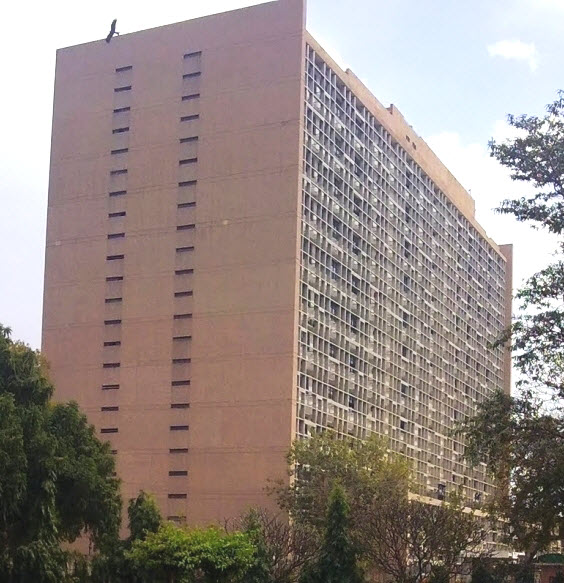

The State Bank is the one institution a foreign investor cannot avoid and cannot shortcut. A bank account, a capital remittance, the registration of shares issued to a non-resident and the transfer of a dividend all depend on its rules. Those rules are administrative, documented and enforced by the bank before the central bank ever sees the file.
What the SBP is
The State Bank of Pakistan was established on 1 July 1948 under the State Bank of Pakistan Order, and draws its powers from the State Bank of Pakistan Act 1956, as amended. The Act gives it a primary objective, domestic price stability, and a secondary one, contributing to the stability of the financial system while supporting the government’s economic policies.
Its functions are set out in section 4C of the Act. They include monetary policy, exchange rate policy, holding the international reserves, issuing the currency, operating and overseeing the payment system, licensing and supervising banks and financial institutions, macro-prudential policy, acting as banker and fiscal agent to the government, and promoting financial inclusion.
Monetary policy is set by a ten-member Monetary Policy Committee: the governor as chair, three senior SBP executives, three board members and three external members appointed by the federal government. The governor is the chief executive, appointed by the president for five years, renewable once, and is assisted by three deputy governors.
What it decides
| Decision | What the SBP controls |
|---|---|
| Monetary policy | The policy rate, liquidity and the monetary stance |
| Bank licensing | Who may take deposits, lend and operate as a bank or development finance institution |
| Bank supervision | Prudential rules, capital, asset quality, governance and enforcement |
| Foreign exchange | The Foreign Exchange Manual, authorised dealers, capital and current account transactions |
| Share registration | Registration of shares and units issued to non-residents |
| Payments | Raast, the payment systems framework, EMIs and payment service providers |
| Reserves | Holding and managing Pakistan’s international reserves |
For a company rather than a bank, the operative document is the Foreign Exchange Manual. It sets out what an authorised dealer may process, what needs prior State Bank approval, and what documentation must be on file before a remittance can be made.
What it does not decide
- Company registration. The SECP incorporates the company. The SBP registers the shares issued to non-residents afterwards.
- Tax. Tax rates, exemptions and withholding are the FBR’s, and the tax clearance needed for some remittances comes from the FBR.
- Sector licences. A bank licence is the SBP’s, but a power, telecom or pharmaceutical licence is not.
- Commercial terms. The SBP sets the rules; the bank decides whether to take your account and on what commercial terms.
- Land and utilities. Provincial and municipal matters, with no SBP role.
The four investor touchpoints
- The corporate bank account. The account is opened by an authorised dealer under the State Bank’s onboarding framework. The framework sets a maximum of five working days for a bank to accept or decline an entity account from the day it receives a complete file. The deadline covers the decision, not the activation of every service, and the clock does not start while the file is incomplete.
- The capital injection. Foreign equity must arrive through the banking system, be documented and be reported. Cash brought in informally cannot later be repatriated as equity.
- Share registration. Shares issued to a non-resident must be registered with the State Bank, through the authorised dealer, using the prescribed form and supporting documents. This is the step most often missed, and it is the one that blocks repatriation later.
- Repatriation. Dividends, disinvestment proceeds, royalties, technical fees and loan repayments can be remitted under the Foreign Exchange Manual, subject to the documentation, the tax position and the company’s compliance record. The bank processes the remittance; the SBP’s rules decide whether it may.
What goes wrong
- Incomplete onboarding files. Attestation, translation and beneficial ownership evidence are the usual gaps. The five-day clock only starts when the file is complete.
- Capital that is not documented. Money that arrives as a loan, a director’s transfer or cash without the right purpose code is difficult to convert into equity later.
- Share registration skipped. The company operates and pays dividends, then discovers the non-resident shareholding was never registered.
- Confusing the bank with the regulator. The bank applies SBP rules but is not the SBP. A refusal can sometimes be resolved by correcting the file; a rule cannot.
- Ignoring the tax clearance. Some remittances need evidence that the tax position is settled. That is an FBR document, not an SBP one.
Reviewed 25 October 2026