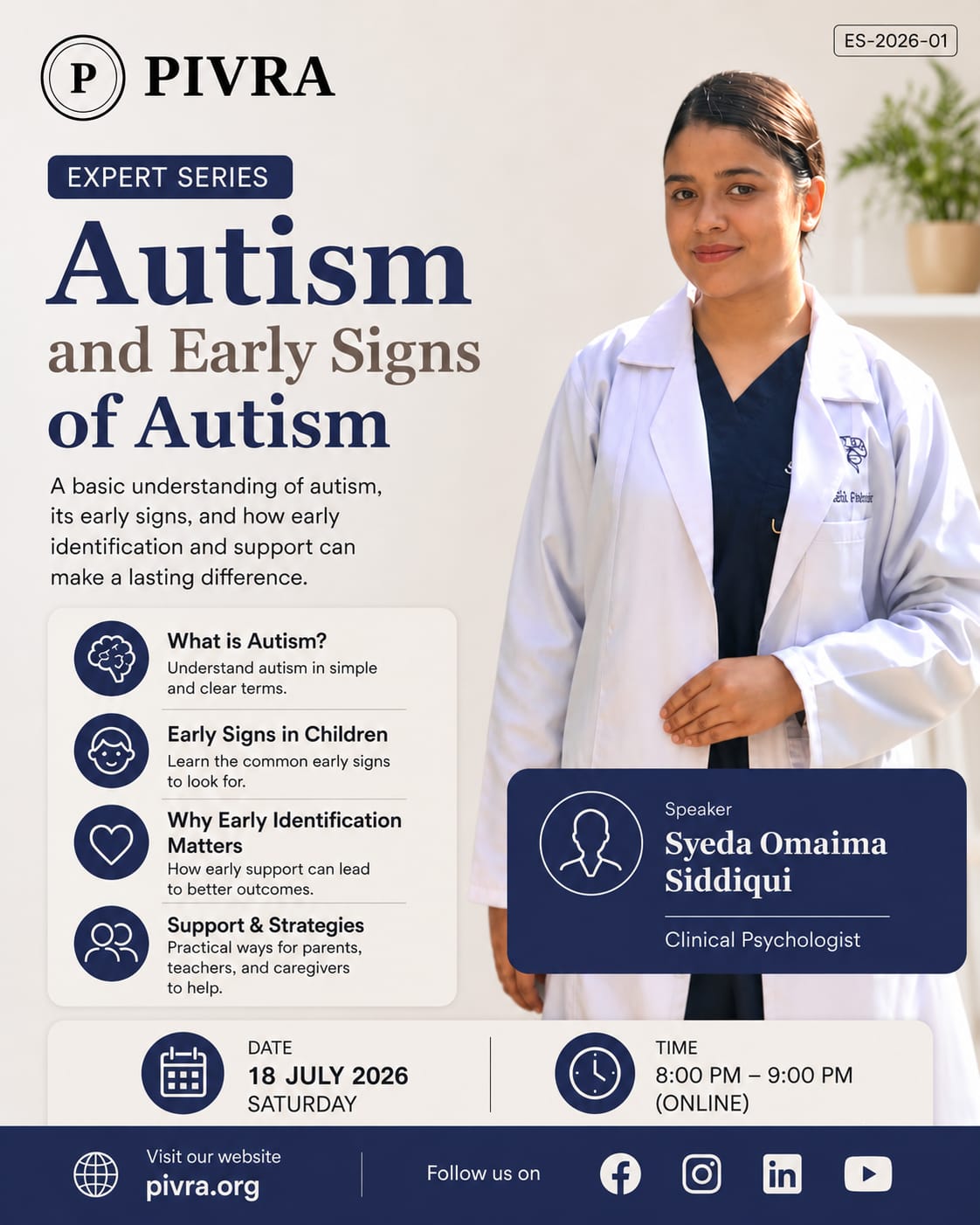
This session gave students, parents, teachers, and caregivers a practical, non-clinical introduction to autism, covering what it is, how it tends to show up early in childhood, why catching it early matters, and what parents and teachers can actually do about it day to day. Ms. Siddiqui, a Behavior Therapist at the Center for Autism Rehabilitation and Training, Sindh (C-ARTS), structured the session around four areas: what autism is, early signs of autism, why early identification matters, and support strategies for parents and teachers.
Autism Spectrum Disorder (ASD) was introduced as a developmental condition that affects how a person communicates, interacts with others, and understands the world. It begins in early childhood and affects communication, social interaction, and behavior. Every child with autism is different: some children need more support, while others need less, and there is no single presentation of autism.
Some early signs may appear before the age of two to three years. These include limited or no eye contact, not responding to their name, delayed speech or no speech, a preference for playing alone, not pointing to show interest, repetitive movements such as hand flapping, rocking, or spinning, a strong preference for routines, and unusual reactions to sounds, lights, or touch.
Recognizing autism early can make a significant difference. Early support helps children develop communication skills, improves learning and social development, and helps reduce challenging behaviors. It also gives parents guidance and confidence, and allows children to receive therapy and educational support sooner.
Children with autism can learn and grow with the right support. For parents, this means keeping a daily routine, using simple and clear language, encouraging communication through play, and praising small achievements. For teachers, it means giving short and clear instructions, using pictures and visual supports, being patient and understanding, and encouraging inclusion with classmates.
Ms. Siddiqui closed with a reminder that behavior is a form of communication. Instead of asking "how do I stop this behavior," she encouraged the audience to ask "what is this behavior trying to tell me?" The session ended with an open Q&A session.
See the full Expert Series schedule, including completed and upcoming sessions.
Back to Expert Series